
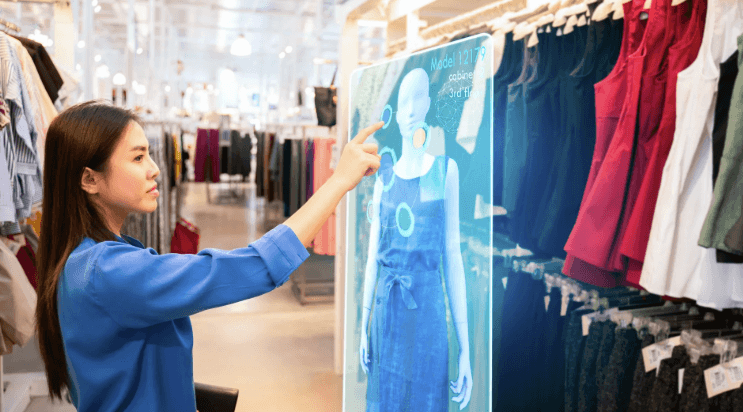
Augmented Reality in Fashion Stores

AR in fashion stores blends digital overlays with the physical space to redefine the shopper journey. Virtual mirrors and AR try-ons enable real-time visualization of fits on bodies or avatars, reducing uncertainty and returns. Scalable fittings, low-latency rendering, and privacy-conscious data governance support broad adoption across devices. The result is a more trust‑driven, conversion‑oriented experience that challenges traditional merchandising, inviting retailers to anticipate what comes next as the technology matures.
How AR Transforms In-Store Shopping for Fashion
Augmented reality (AR) redefines in-store experiences by overlaying digital assets onto the physical environment, enabling shoppers to visualize garments on virtual avatars or themselves without trying them on. AR systems deploy virtual mirrors and real-time size fitting analytics, delivering instantaneous feedback. The approach empowers autonomous decision-making, reduces returns, and harmonizes brand precision with consumer freedom across dynamic, tech-driven retail environments.
Choosing AR Use Cases That Drive Try-Ons and Sales
In light of AR-enabled in-store experiences, retailers must identify use cases that directly drive try-ons and elevate sales. Strategic AR focuses on scalable virtual fittings and immersive style overlays, aligning product discovery with purchase intent.
Implementing AR: Hardware, Software, and Data Considerations
Implementing AR in fashion retail requires a disciplined alignment of hardware capability, software architecture, and data governance, ensuring that immersive try-ons are accurate, fast, and privacy-preserving. The approach emphasizes hardware integration, modular software stacks, low-latency rendering, and robust data governance, enabling scalable trials across devices while preserving user trust, performance, and creative freedom for designers and shoppers alike.
Measuring Impact: KPIs, ROI, and Customer Experience
Measuring impact in fashion AR hinges on a disciplined set of metrics that translate immersive experiences into tangible business outcomes.
Precision defines success: accuracy metrics track system reliability and decision quality, while attribution models clarify which interactions drive conversions.
KPIs align with customer experience goals, ROI reframes value creation, and continuous feedback informs iterative refinement, empowering brands to innovate with measurable freedom.
Frequently Asked Questions
How Do AR Experiences Impact Accessibility for Diverse Customers?
AR experiences broaden accessibility by enabling inclusive interfaces and multilingual support, empowering diverse customers to engage independently. In visionary, technical prose, this approach champions freedom, clarity, and adaptability across devices, contexts, and cultural needs, fostering universally approachable fashion technology.
What Ethical Considerations ARise With AR in Fashion Retail?
AR raises ethical concerns around privacy concerns and data ownership, as designers delineate deployments. Visionaries note vigilant vigilance: data stewardship, transparent terms, consent, minimalism, security, and accountability, while fearless free thinkers demand fair access, principled practices, and responsible, transformative technology governance.
Can AR Reduce Return Rates Across Different Product Categories?
AR can reduce returns by improving product fit across categories, leveraging precise measurements and fit simulations, enabling informed choices while preserving shopper autonomy and exploration; this visionary, technical approach envisions reduced returns and empowered, freedom-fueled decision-making.
See also: The Role of Technology in Renewable Energy
How Does AR Influence Brand Storytelling Beyond Try-Ons?
AR shapes brand storytelling beyond try-ons by fostering brand nostalgia and sensory immersion, enabling immersive narratives that transcend product alone; it weaves technical elegance with visionary freedom, inviting audiences to experience emotional resonance and autonomous interpretation.
What Training Do Staff Need for Ar-Enabled Stores?
Staff onboarding for AR-enabled stores emphasizes procedural fluency and user-friendly protocols, while technical adaptability remains essential; the vision centers on empowering personnel to navigate evolving interfaces, transforming curiosity into competence through continuous, autonomous learning.
Conclusion
In the grand theater of retail, AR transforms dressing rooms into radiant gateways where imagination and data tango in perfect synchrony. Precision overlays predict fit with rocket-fast latency, turning hesitations into confident commitments. Hardware and software unite in a symphony of scalable, privacy‑savvy solutions, empowering designers and shoppers alike. Measurable impact balloons—from conversions to reduced returns—while customer journeys glow with immersive, trust‑driven delight. The future of fashion stores stands reborn, relentlessly optimized by augmented realities.